
Tips to help protect your skin this summer
April 20, 2026Categories: Wellness and Prevention, Cancer Care
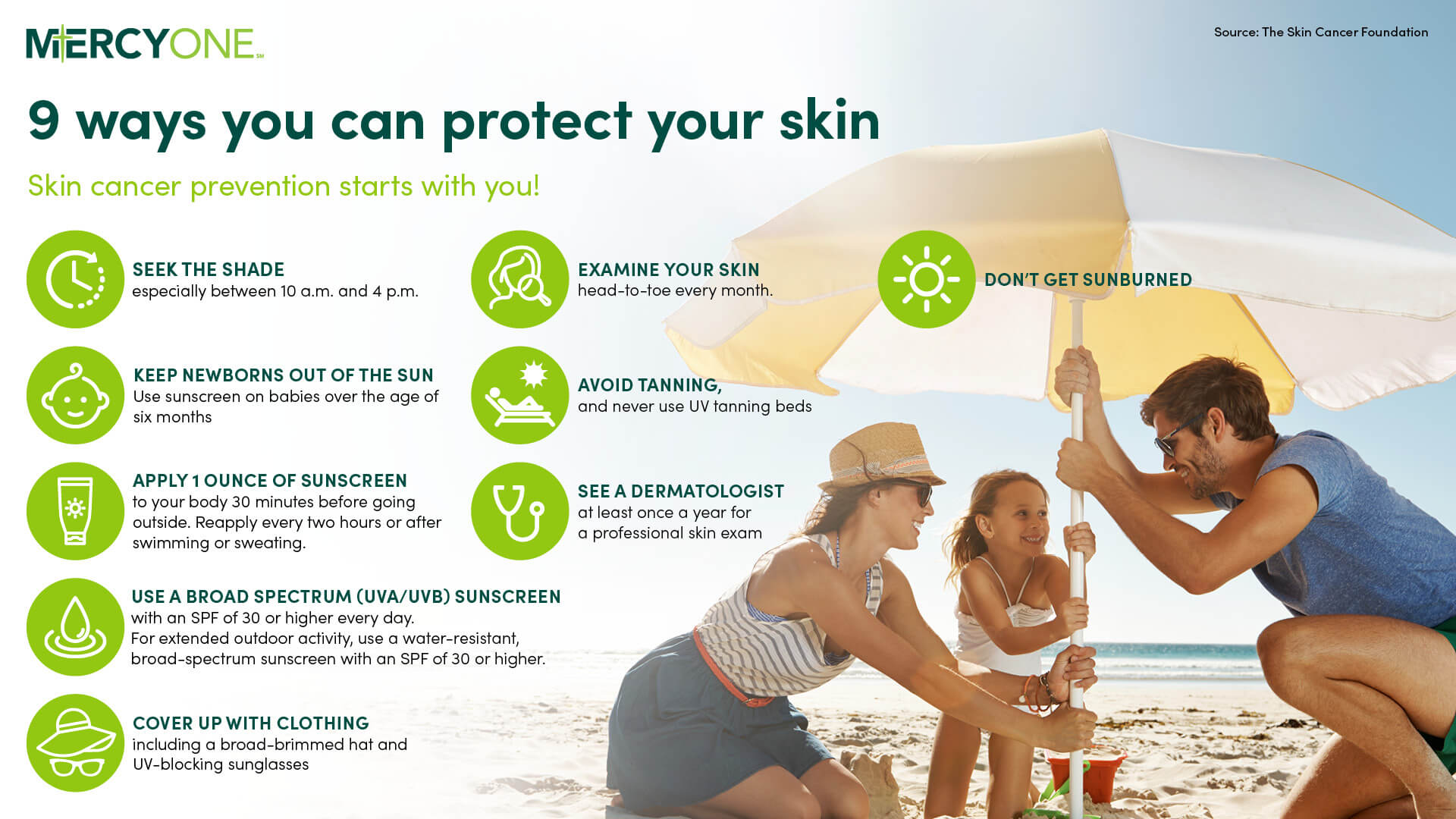
Overview: Protecting your skin from the sun is an important step in preventing skin cancer. From picking the right sunscreen to when to reapply, discover tips on how to protect your skin from sun damage in the summertime.
With warmer weather and sunnier, longer days in the summertime, we naturally spend more time outside. Practicing sun safety helps protect your skin from damage, which will also help protect you from skin cancer.
Here's how to protect your skin this summer.
Wear sunscreen
The sun emits a wide spectrum of light including ultraviolet-A (UV-A) and ultraviolet-B (UV-B). These are the two most common types of UV rays that contribute to skin cancer. They damage the skin at a DNA level that can eventually lead to skin cancer.
Studies have shown that sunburns, especially blistering sunburns during childhood, can dramatically increase the risk of skin cancer later in life. It’s important that everyone in your family wears sunscreen to block out these harmful rays and reduce the risk of skin cancer.
Choose the right sunscreen
While The Skin Cancer Foundation recommends using sunscreen with SPF of 15 or higher for everyday use, it’s smart to choose a sunscreen with SPF of 30 or higher to provide stronger protection. Remember, both UV-A and UV-B can cause skin cancer, so choose sunscreen that protects against both. This will be labeled as protecting against a “broad spectrum” of rays.
How often should I re-apply sunscreen?
Sunscreen naturally breaks down on the skin over time and loses effectiveness. So, when you’re spending a lot of time outside, you should reapply sunscreen at least every two hours. You should reapply more often if you’re swimming or sweating. It’s best to reapply immediately.
More tips to protect your skin
- Seek the shade, especially between 10 a.m. - 4 p.m.
- Don't get sunburned.
- Keep newborns out of the sun and use sunscreen on babies after six months and older.
- Examine your skin from head to toe every month.
- Cover up with clothing including a wide brim hat and UV-blocking sunglasses.
- See a dermatologist at least once a year for a skin exam.
- Avoid tanning and never use tanning beds.
If you’ve noticed any changes to your skin or have any questions about what your risk of skin cancer is, reach out to a MercyOne providerhttps://www.mercyone.org/providers?hg_specialties=2313%2C4911 to schedule an appointment.
This blog was medically reviewed by a MercyOne provider.