
Our MercyOne story
Our MercyOne Story
 Timeline
19th Century
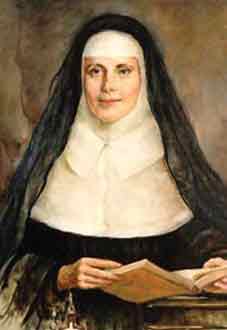
- 1831: Mother Catherine McAuley founds the Religious Sisters of Mercy in Dublin, Ireland.
- 1843: The Sisters of Mercy come to the United States to run a hospital in Pittsburgh, Pennsylvania. Their ministry spreads quickly.
- 1860: Mother M. Clara Pfaender founds the Congregation of Franciscan Sisters, Daughters of the Sacred Hearts of Jesus and Mary, in Olpe, Germany.
- 1872: Three Franciscan Sisters are sent from Germany to start a mother house near St. Louis.
- Late 1800s: The Sisters of Mercy established hospitals across Iowa. Segments of the order, or what came to be called Regional Communities, operate the hospitals.
- 1879: Three Franciscan Sisters begin caring for patients in a house in Milwaukee, Wisconsin. The Sisters of Mercy arrive in Dubuque. They launch a healing ministry now known as Mercy Medical Center – Dubuque.
- 1893: Mercy Medical Center – Des Moines is founded by the Sisters of Mercy from Davenport. It’s the first hospital in Des Moines. Sponsorship later is transferred to the Sisters of Mercy Regional Community in Omaha.
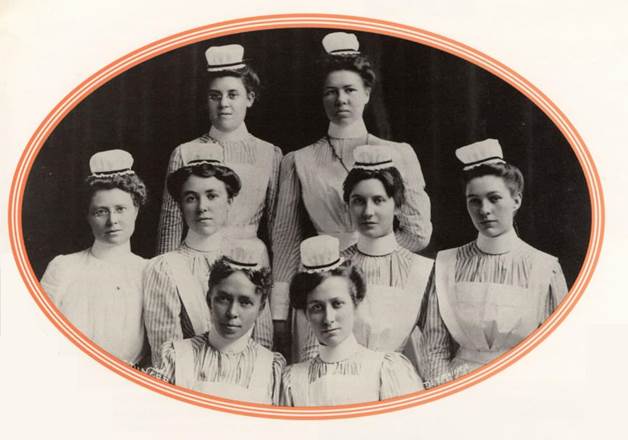
- 1899: The Mercy School of Nursing opens in Des Moines.
20th Century
- 1912: The Franciscan Sisters found St. Francis Hospital in Waterloo, Iowa.
- 1947: The Franciscan Sisters move their provincial mother house to Wheaton, Illinois, and become known as the Wheaton Franciscans.
- 1976: The Sisters of Mercy Health Corporation based in Farmington Hills, Michigan, forms. It controls hospitals in three states. Iowa hospitals are in Clinton, Dubuque, Mason City, and Sioux City. The group is later renamed Mercy Health Services.
- Regional Communities of Religious Sisters of Mercy also operate hospitals throughout Iowa.
- 1983: Wheaton Franciscan Services, Inc. (WFSI) is incorporated. It embraces the hospitals and health care operations the Wheaton Franciscan Sisters had grown and merged since their beginning.
- 1986: WFSI sets up regional health care holding companies. They include the Franciscan Iowa Service Corporation, WFSI-Fox Valley, WFSI-Illinois, WFSI-Milwaukee and WFSI-Racine. WFSI forms Covenant Medical Center in Waterloo, Iowa, by merging St. Francis Hospital and neighboring Schoitz Medical Center.
- 1990s: Trinity Health is created when Mercy Health Services merges with the Sisters of the Holy Cross.
- 1996: Catholic Health Initiatives forms. The Catholic Health Corporation (previously formed by the Regional Community of Omaha RSM) joins with other Catholic orders and health systems to create the new group. CHI is based in Englewood, Colorado. Mercy medical centers in Des Moines and Centerville are among its health care units.
- 1998: Mercy Health Network forms. Mercy Health Services (a predecessor to Trinity Health) and CHI agree to pursue their shared vision to improve health care services and the health status of people in their communities. The two national systems sign a Joint Operating Agreement (JOA) for their units in Iowa and selected adjacent areas. They will work as one regional health system.
21st Century
- 2000s: WFSI runs hospitals, clinics, home care, and other services and facilities in three states.
- 2006: WFSI unites its regions into Wheaton Franciscan Healthcare and Wheaton Franciscan Medical Group. The system includes Wheaton Franciscan Health – Iowa. The Iowa group offers care at Covenant Medical Center in Waterloo, Sartori Memorial Hospital in Cedar Falls and Mercy Hospital of Franciscan Sisters in Oelwein. Its services also include Covenant Clinic.
- 2015: The Wheaton Franciscan Sisters announce the transfer of Wheaton Franciscan Healthcare to new owners and sponsors. Its Iowa facilities will become part of MHN.
- 2016: The Wheaton Franciscan Sisters transfer their Iowa operations to Mercy Health Network.
- CHI and Trinity Health sign a new agreement. The contract makes MHN a more integrated, effective, and competitive regional health system. It simplifies decision making and streamlines business processes. MHN is more clinically, operationally, and financially integrated. Hospitals, clinics and other ministries of MHN function as a true regional system. It responds to community needs and business opportunities quickly and efficiently. The units work together to enhance quality, control costs, and improve the health of populations.
Today
Now a member of Trinity Health, based in Livonia, Michigan and one of the largest Catholic not-for-profit health systems, MercyOne provides award-winning health care to our communities.
We have annual operating revenues of more than $3.8 billion.
We employ more than 22,000 people.
More than 2,000 physicians and advanced practice clinicians provide care in MercyOne facilities. With nearly 1,000 formally integrated, MercyOne is one of the largest multi-specialist physician group practices in Iowa.
The MercyOne ACO (Accountable Care Organization) is recognized as one of the most successful in the nation. Health coaches and other fresh techniques help people better manage chronic diseases and improve their health.
In 1914, Joseph Francis Sartori presented funding to the city of Cedar Falls, Iowa for Sartori Memorial Hospital as a memorial to his parents, Joseph and Theresa Sartori. Since then, three Catholic medical centers have merged to form MercyOne Northeast Iowa, providing personalized health care to the Cedar Valley, MercyOne Waterloo Medical Center, MercyOne Cedar Falls Medical Center and MercyOne Oelwein Medical Center.
Since 1988, MercyOne Waterloo Cancer Center has offered advanced treatment techniques, serving as Iowa’s first stand-alone facility to combine both radiation and chemotherapy treatment, and offer full support services in one convenient location, standing as a promise of hope for those with cancer.
In 1994, care forms to further extend the integrated network of physician health care services to the communities it serves within the metropolitan area of Waterloo/Cedar Falls, as well as in 13 rural communities:
- Evansdale
- Fairbank
- Jesup
- LaPorte City
- Oelwein
- Reinbeck
- Shell Rock
- Tripoli
- Waverly
In 2014, the first surgery cases with the Da Vinci Surgical Robot began on January 22. Sartori Memorial Hospital celebrates 100th anniversary in September. 3D Mammography comes to Covenant Medical Center in December.
MercyOne Centerville Medical Center, one of Iowa’s oldest continually operating hospitals is also one of Iowa’s finest and busiest rural hospitals.
In fiscal year 2012, the hospital saw over 150,000 total inpatient and outpatient visits. MercyOne Centerville is a subsidiary corporation of MercyOne Des Moines Medical Center and a member of Catholic Health Initiatives, Denver, CO.
In September 2010, MercyOne Centerville Medical Center, formerly St. Joseph’s Mercy Hospital in Centerville, Iowa celebrated its centennial year — 100 years of compassionate care to Centerville, Appanoose County, and the surrounding area in southern Iowa and northern Missouri.
A full history of the hospital, with many other interesting facts and personalities was published for the occasion along with an evening of memories, Mass of celebration, rededication ceremony and reception, attended by over 500 people. A special historical exhibit on the hospital’s history was also opened for viewing at the Appanoose County Historical Museum.
Origin
The hospital’s origin was the “Centerville Hospital”, established in 1902 when a group of doctors and a progressive group of women raised $4500 to purchase the Peatman House on South Main Street which opened to the public in 1903.
The hospital quickly outgrew itself and outstanding indebtedness plagued the hospital. In 1909, the need for more space coupled with state regulations requiring teaching hospitals like the Centerville Hospital to have twenty five beds, became a problem for the hospital which depended on their school of nursing for staff. The hospital board of directors sought ways to help secure a larger and more financially stable hospital.
Although the Iowa legislature had recently passed a law that allowed counties to establish county hospitals that would be supported by tax payers, the board found little support for this among the farmers. When little came of this initiative, representatives of the hospital board contacted the Sisters of Mercy in Omaha, NE about the possibility of taking over management of the Centerville Hospital.
The board of directors was impressed with the Sisters who had a proven track record for managing hospital operations. Wherever they went, they stayed and built up the institutions entrusted to them, serving the general good of the community.
On March 1, 1910, the Sisters of Mercy arrived in Centerville and took ownership and oversight for the Centerville Hospital. The name of the hospital was changed to St. Joseph’s Mercy Hospital. Under the direction of the Sisters, the hospital grew and flourished with the building of a new four story hospital in 1916, an addition in 1956 and finally a new modern facility located north of Centerville that was built in 1979. The ecumenical spirit of the Sisters and their partnership with the community established a strong allegiance to the hospital which continues today.
History of the Sisters of Mercy
Mother Mary Catherine McAuley, who along with a group of young women established a House of Mercy in Dublin, Ireland in 1827, founded the Religious Order of the Sisters of Mercy (RSM). Their mission was to provide shelter and education to young, unemployed women. Mother McAuley and her co-workers soon extended their work to the care of orphans, education of children and the care of the sick and aged.
The Sisters of Mercy, at the request of the Bishops of America, came to the United States in 1840 and established their first convent in Pittsburgh, Pennsylvania. The community grew rapidly and convents of Mercy soon spread throughout the country. There are currently nine provinces of the Sisters of Mercy in the United State and the Province Genera late is located in Maryland.
Sister Evangelist Claherty and Sister Alacoque Lannan, from the Mercy order in Council Bluffs, IA came to Centerville, Iowa in September of 1910 and took over management of the Centerville Hospital.
MercyOne Centerville Medical Center is owned by MercyOne Des Moines Medical Center and is a member of the MercyOne Network of Iowa and Catholic Health Initiatives.
July 1999, Mercy Health Network establishes a new mission, vision and corporate identity including a name change. As a result, Samaritan Health System became Mercy Medical Center – Clinton.
July 1999, Samaritan Health Care Foundation re-registered with the state of Iowa to be known as Mercy Healthcare Foundation.
2000 Merger of Mercy Health Services and Holy Cross Health System formed Trinity Health. The home office is located in Livonia, MI.
In October 2001, a $5.5. million expansion and renovation project begins including the 2001 addition of a fixed MRI facility, second floor renovations for Progressive Care Unit, a second Cardiac Cath Lab including renovation of the first lab, and a fourth floor addition to the west wing for a new surgical unit.
2005 New Radiation Oncology Building opens at the North Campus.
2006 Inpatient Rehabilitation Unit opens at Mercy South Campus; closes in 2013.
October 27, 2007, Mercy – Clinton transitions to the Electronic Medical Record (EMR) 2007 for acute care, fundamentally changing the way that caregivers document care.
2010 Mercy Specialty Clinic opens.
2011 Senior-friendly emergency services begin in ER.
2012 The Mercy Wound Care Center opens, a Stroke Robot is added to Emergency Services in 2012 collaboration with the University of Iowa Stroke Center, Telepsych begins in Behavioral Medicine Unit, and formation of Mercy Medical Group, a joint venture with Genesis Health System, was announced. May 2013, the Merger between Trinity 2013 Health of Livonia, Michigan, and Catholic Health East (CHE) becomes CHE Trinity Health
May 2013, the Merger between Trinity 2013 Health of Livonia, Michigan, and Catholic Health East (CHE) becomes CHE Trinity Health.
2014: Mercy Medical Center Today We are a non-profit, Catholic health system driven by a long-standing Mission to serve.
We are one of the largest employers in the Clinton area with more than 900 employees, annually investing more than $46.6 million in payroll and contributing an economic impact of $66.3 million annually.
We are a member of the fourth largest Catholic Health System in the world with a network of 86 hospitals in 20 states.
We provided more than $3.24 million in community benefit programs and charity care in fiscal year 2013.
We partner with 160 physicians for more than 30 specialty service lines from birthing services to end-of-life care.
We challenge ourselves to excellence, achieving high standards of performance in Quality, Safety and Service, and earning state and national recognition from The Joint Commission, Home Care Elite® Top Agency, and the Women’s Choice Award™ for Emergency Services.
We are continuous learners, encouraging colleagues to achieve advanced degrees and certifications and take pride in the high percentage of board certified physicians in the area.
We invest in advanced technology, implementing the first University of Iowa Stroke Center “stroke robot” and tele-health psychiatry services in Iowa and bringing more than $52 million in advanced, cutting-edge technology and infrastructure to our community over the last 10 years.
We embrace technology, earning one of the highest levels of adoption in the nation for the Electronic Health Record for physician documentation and medical imaging capabilities.
Learn more about our 125 Years of Honoring Our Heritage of Hearts and Hands that Serve
In 1893, to provide access to much-needed hospital services and loving care in Des Moines, Mother Mary Baptist Martin and Father Michael Flavin set up a temporary location for Mercy Hospital with two private rooms and a ward for five patients. Two years later, Mercy Hospital opened its facility that was heralded as “a great institution of charity to stay with the city for all time.” Today, MercyOne Central Iowa is one of the largest medical centers in central Iowa, providing care to the Des Moines area and surrounding counties.
The education of women has always been a primary mission of the Sisters of Mercy. On April 17, 1899, the Mercy Des Moines School of Nursing formally opened, offering a two-year degree. Graduation exercises for seven students were held on June 17, 1901.
Mercy’s School of Medical Technology came alive in 1954, with a four-year program that combined liberal arts and medical technology in affiliation with Drake University.
To meet the needs of the Des Moines community, Mercy Clinics was developed in 1983. It opened its first Mercy Medical Clinic at Valley West Mall in 1983. Today, Mercy Clinics is central Iowa’s largest multi-specialty clinic system, operating more than 50 family practice, specialty, urgent care and pediatric clinics.
The first Mercy emergency air transport took flight in November 1987. Today, MercyOne’s fleet of air ambulances are the fastest in Iowa. With a cruising speed of 180 mph, these helicopters provide rapid transport and expert care to the critically ill and injured across the state.
Also in 1987, the House of Mercy opened its doors in Des Moines as a comprehensive behavioral health center to provide high-quality, personalized care and making the community a healthier place by caring for individuals and families.
MercyOne and Iowa Heart Center integrated in 2008, combining the region’s foremost cardiologists, cardiothoracic surgeons and vascular surgeons with Iowa’s leading cardiovascular hospital. Today, MercyOne Iowa Heart Center is the state’s largest provider of cardiovascular care.
Iowa’s first obstetrics emergency department was opened at Mercy in November 2016. Staffed by hospitalists available 24/7 basis for emergency pregnancy care, the MercyOne Women & Infants’ Center ensures patients are evaluated within 30 minutes of being admitted – helping provide mother and baby with a safe delivery.
The first center of its kind in Iowa, MercyOne Comfort Women’s Center opened in 2017, to offer care for women with a special focus on the health care needs of women in their prime. In one convenient location, women have access to comprehensive breast care through MercyOne Katzmann Breast Center, medical imaging and testing, internal medicine, mental health services and endocrinology.
Our MercyOne Eastern Iowa story
With a history dating back more than 130 years, MercyOne Eastern Iowa includes medical centrers in Dubuque, Elkader, Dyersville and Clinton. Our facility in Clinton has branches in DeWit, Fulton and Morrison specializing in family medicine and Savanna Home Health & Hospice Care based in Illinois.
Our MercyOne Dyersville Medical Center offer care to MercyOne Dyersville Senior Care and the Ellen Kennedy Living Center, an affordable retirement community for older adults aged 55 and older who want the benefits and security of living in a home-like environment.
In 1879, Sisters of Mercy opened St. Joseph Mercy Hospital in Dubuque at the request of Bishop John Hennessy. This original hospital was in a rented house near Third and Bluff Streets.
Through these past 130 years, MercyOne Eastern Iowa has grown through expansions, acquisitions and consolidations to help provide exceptional, personalized care to our communities
In 2004 MercyOne Dubuque Medical Center achieved MagnetTM designation by the American Nurses Credentialing Center.
In July 2019, MercyOne Clinton Medical Center and Medical Associates of Clinton joined forces to expand care, improving access and creating an even higher level of care coordination to benefit patients and communities throughout the region.
 History of the Hospital
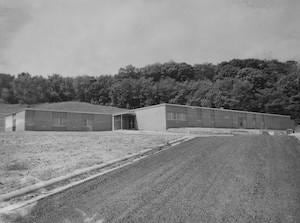
MercyOne Elkader Medical Center (formerly known as Central Community Hospital) was dedicated on June 10, 1961. The dedication brochure explained the hospital as follows:
“The design elements include a medical-surgical unit with 30 beds, nurses’ station and utility room. All beds were electrically operated. Each room has a private bath. The maternity unit has five beds, nursery, nurses’ station and utility room. The delivery suite is composed of a delivery room and clean-up area. The floors are ceramic tile and the walls are structural glazed tile.
Surgery will be done in a well equipped surgery suite with an excellent operating light. The surgery room, sterile corridor and clean-up room all have ceramic tile floors and glazed tile walls. Service areas include a kitchen with electric ranges and ovens, a walk-in refrigerator and freezer and stainless steel counters. The central supply room includes two sterilizers and a water still providing necessary sterile supplies for all the hospital. Other areas include a modern laboratory, X-ray department and an electrocardiograph-basil metabolism rate room.”
Corporate officers were Dr. P.R.V. Hommel, President, Dr. A.R. Powell, Vice-President, Lester Schoulte, Secretary, and John Miller, Treasurer.
Hospital board consisted of Mrs. Walter Wright, Avron Oleson, Chairman, Haldon Reimer, Carl Meisgeier, George Schmidt, Mrs. F. F. Kitterman, William McTaggart, Roy Ruegnitz, W.W. Sadewasser, J.C Costigan and Floyd Tesreau.
Staff included Dr. P.R.V. Hommel, Dr. A.R. Powell, Dr. Clyde Deal, Jerald Lybbert, Lab and X-ray technician, Mrs. F.F. Kitterman, Administrator, Mrs. J.B. Donlon, Supervisor, Mrs. Charles Gundacker, Receptionist and Clarence Woods, Maintenance.
Auxiliary Board Members included Mrs. Milton Wolf, Mrs. Lulu Murphy, Mrs. Grace Morse, Mrs. Ed Hyde, Mr. W. H. Walch, Mrs. Arthur Meyer, Mrs. W.C. Reimer and Mrs. Greta Jane Carlsen.
The hospital was built at a cost of $400,000 and financed in its entirety by people and friends of central Clayton County with voluntary contributions. Emmett Whalen and A.J. Johnson chaired the fundraising efforts.
The first major renovation took place in 1993. The emergency room, laboratory and x-ray were renovated, a steel, sloped roof was placed over the new heating, ventilating and air conditioning equipment and the entire hospital was updated with wallcovering, paint and new lighting. The “Commitment to Tomorrow” campaign generated $1.3 million of the $1.7 million renovation.
In 2005, a CT room, decontamination room, medical records and soiled linen storage were added to the facility. A 4-slice CT was installed following the renovation. The community donated over $200,000 to the $1 million project.
Rehabilitaion Services, Physical Therapy, Speech Therapy, Occupational Therapy and Cardio-Pulmonary Rehab were brought to the hospital campus when an addition was added in January of 2006. An anticoagulation clinic was also included.
The operating room was updated in 2008. The operating suite was updated to accommodate information technology (i.e. computer screens for surgical equipment); improve patient flow through the OR with wider hallway, easy access to recovery room and improved surgical table; enhance infection control practices through creation of “dirty equipment cleaning room” and sterile equipment storage room. The community donated over $200,000 to accomplish this project.
In 2016, a 40-slice CT Scanner was purchased, replacing the 4-slice CT. This upgrade improved the images and reduced exposure to radiation. The community donated $200,000 toward this $600,000 project.
In December of 2016, Frances Zichal retired as CEO of Central Community Hospital serving in the role for 38 years.
The Central Community Hospital (CCH) Board of Directors and Mercy Health Network (MHN) announced on January 18, 2018 that a Letter of Intent for Des Moines-based MHN to acquire CCH and fully integrate the hospital into Mercy Health Network had been signed. The final agreement is pending the results of a mutual due diligence period. On October 1, 2018 CCH officially became a wholly owned member of Mercy Health Network. Leaders from both entities and community members came together for a blessing and official welcoming of the hospital into Mercy Health Network on November 6, 2018. On February 1, 2019 the hospital’s name was transitioned to MercyOne Elkader Medical Center and the ambulance service’s name was transitioned to MercyOne Elkader Ambulance.
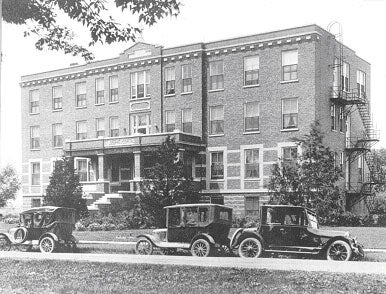
On May 4, 1915, a contract to provide a hospital in New Hampton was signed, sealing a relationship between the Sisters of the Holy Ghost and the Citizens of New Hampton and surrounding area. By April 21, 1916, more than $15,000 had been raised.
The building of the hospital was completed and on January 8, 1917, the first Sisters arrived in New Hampton to staff the hospital. Later that month, they wrote the first letter to their Sisters in Techny, describing their reception in New Hampton....
“This is the first hospital here in town. The joy and interest of the people are rather great. Young and old, poor and rich, they are all coming to see the hospital. Even five year olds are asking if they could come to see the hospital. We marvel above all at the never-ending sacrifices of the people. They collected money for the last five years, and now since we are here the people's zeal is like a new awakening. Now they can bring the sick to their own hospital, and all sacrifices have become easy for them."
On January 12, 1917, the building was formally dedicated by His Excellency the Most Reverend Archbishop Keene.
St. Joseph Community Hospital was officially opened on February 6, 1917. Sister Patricia Wegmann carried out the responsibility and duties as the first "Sister-in-Charge" or Administrator.
In 1990, the Holy Spirit Missionary Sisters passed the torch of leadership of St. Joseph Community Hospital to the Religious Sisters of Mercy. Under the leadership of Mercy Health Services, St. Joseph's benefited from being affiliated with a global organization as well as a member of a network of hospitals in North Iowa.
In July 1999, St. Joseph Community Hospital officially changed its name to Mercy Medical Center - New Hampton. With the same name and mission as the other six member hospitals in Iowa, we became stronger in our quest to serve our communities as a premier integrated system across the state.
In February 2019, our name changed to MercyOne New Hampton.
Service to the sick and the injured, to those being born into the world, and to those departing from this life, has continued uninterrupted from then until now. Even though significant change has occurred since we were established over 100 years ago, our humble beginnings have persevered, and rich traditions continue to be a part of the daily routine at MercyOne New Hampton.
Subsequent Building Projects
1967 - Our current hospital was constructed.
1983 - Critical Care Unit Added
1996 - Imaging Suite Added
2004 - Expansion and Renovation project completed which included
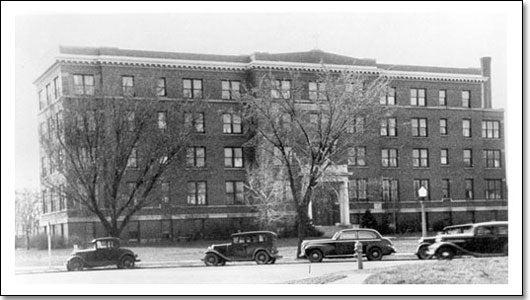
Our MercyOne North Iowa Story
- The Sisters of Mercy opened St. Joseph Mercy Hospital in Mason City in 1916. Their efforts to care for the growing community augmented those of a group of local doctors, who had established Park Hospital seven years earlier.
- Park later was renamed North Iowa Medical Center and was moved from its downtown location to the west side.
- The hospitals consolidated in 1993 to become Mercy Medical Center North Iowa, known today as MercyOne North Iowa Medical Center.
In 1869, the Sisters of Mercy arrive in Davenport to raise money for a girl's school in DeWitt, Iowa. While visiting Davenport, one of the Sisters of Mercy, Mother Borromeo, is given a tour of the Scott County Poor Farm and witnesses notorious conditions there. One of the vows of the Sisters of Mercy is to "care for the poor, sick and indigent." Based on the community need, they abandon their plan for a school and start Mercy Hospital in Davenport instead. The Sisters of Mercy welcome their first patient to Mercy Hospital that same year and become the third hospital established west of the Mississippi River. 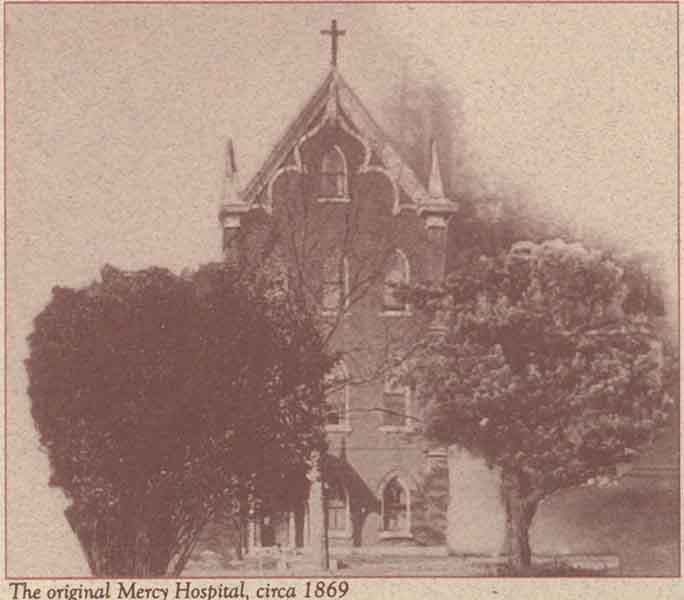
Three years later, in 1972, a four-story hospital building opens at Mercy and is named St. Elizabeth’s after Mother Borromeo’s birth name. St. Elizabeth’s begins treating women with mental illness.
During the summer of 1873, Davenport experiences a Cholera outbreak leaving over 100 dead. The sisters of Mercy assist the Board of Health in taking care of patients, filling a 250 bed emergency hospital located in a downtown warehouse.
In 1874, Mother Borromeo, founder of Mercy Hospital, dies of cancer at 42. She is buried in a cemetery on the hospital grounds and later a chapel is built on her grave site.
The first documented appendectomy in the United States occurs at Mercy Hospital in 1883. The following year, in 1884, St. John’s Hospital for Mentally Ill Men opens on Mercy Campus.
Years later, the need for a hospital closer to downtown arises, leading to St. Luke’s opening in 1895 at 8th and Main streets. Also in 1895, nursing training begins at St. Luke’s and Mercy.
In 1918, St. Luke’s becomes a charter member of the American Hospital Association (AHA). The following year, construction on the new St. Luke’s Hospital is completed and operations move to Rusholme and Bridge streets.
Mercy hospital receives accreditation from the American College of Surgeons (ACS) in 1924. And almost 10 years later, on March 19, 1932, a new wing of Mercy with 150 addition beds, a new surgery, x-ray, laboratory and a pediatric unit opens and is dedicated by Bishop Rohlman.
_______
The deadly fire of St. Elizabeth’s
1950 - January 7 - Massive, Deadly Fire Engulfs St. Elizabeth's
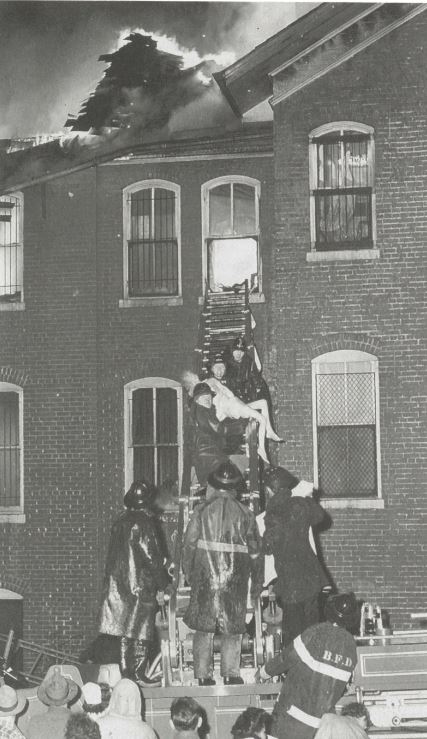 In the early morning of January 7, 1950, the 47 Sisters of Mercy are awakened by the cries of “Help, we’re on fire!” Nearby, St. Elizabeth’s Hospital for women with mental illness is engulfed in flames.
St. Elizabeth’s residents are trapped behind barred windows in the rapidly spreading inferno, making exits inaccessible. There is no sprinkler system, and only one exterior fire escape, but locked doors block the route out of the building. Firefighters save 25 women by breaking through walls and barred windows. 41 women die.
After the fire, both St. Elizabeth’s and St. John’s Hospital for men with mental illness are closed. The event, one of the deadliest tragedies in Iowa history, leads to improved building codes at the state and national levels. Decades later, MercyOne Genesis continues to remember the victims with a focus on safety for patients and employees.
______
In 1951, Mercy School of Nursing becomes St. Ambrose College Division of Nursing.
Mercy celebrates 100th anniversary in 1969 and a year later St. Luke’s celebrates 75 years of dedicated service. 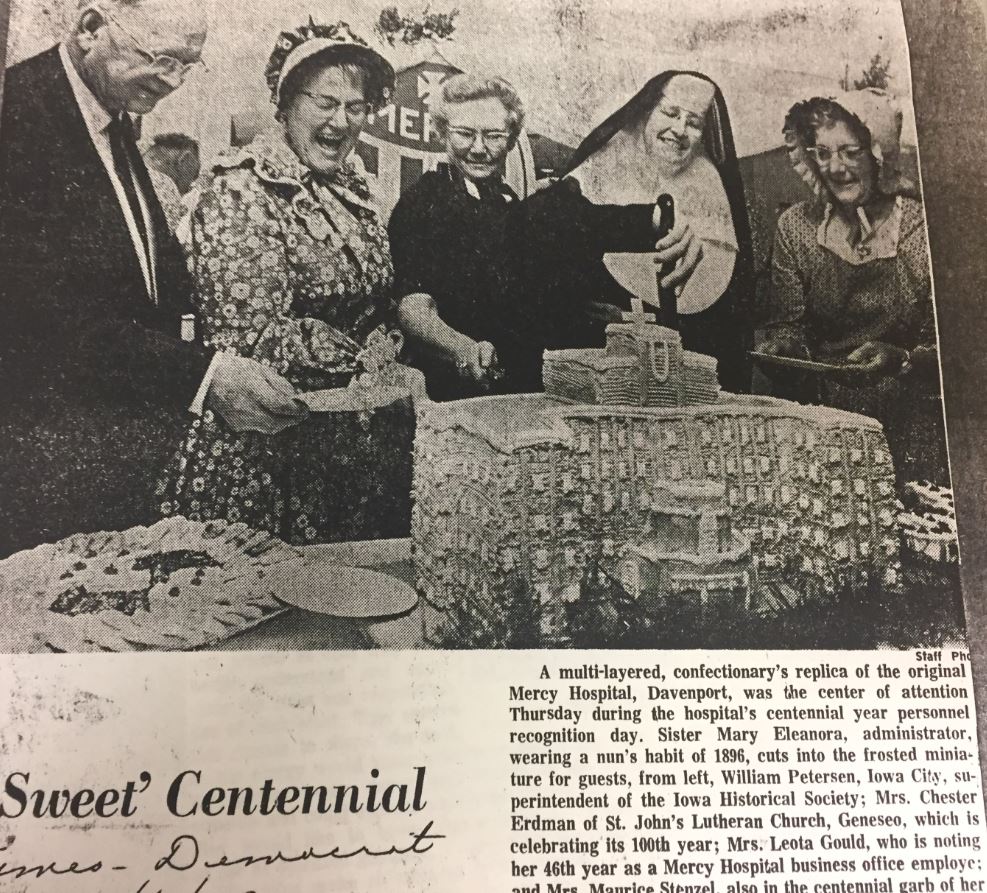
In 1973, the first merger proposal between Mercy and St. Luke’s is considered, however, community pressure derails plans. Then Mercy announces plans to build a new hospital and breaks ground in 1978.
In 1982, St. Luke’s unveils a newly updated and renovated facilities with fewer patient beds and more space for outpatient services.
20 years after the first merger proposal, in 1993, boards of Mercy and St. Lukes announce their plan to affiliate.
June 1, 1994, the consolation of Mercy and St. Luke’s is finalized and officially renamed Genesis Health System. Leo Bressanelli becomes the first CEO and President of Genesis.
Two years later, in 1996, Illini Hospital in Silvis, Illnois joins Genesis, creating the region’s first bi-state health system. And in 1997, Dewitt Community Hospital (est. 1952) affiliates with Genesis. River Valley Healthcare also joins Genesis, vastly broadening their physician network in 2001. That same year, the Genesis Heart Institute officially opens.
In 2005, Genesis Medical Center receives Magnet Designation for nursing excellence.
Genesis and St. Ambrose University break ground for a health sciences building on the GMC-West Central Park campus in 2009. Genesis donates $3 million and land for the project, including a $1 million gift from the Genesis Foundation to establish a nursing simulation lab.
Jackson County Public Hospital (est. 1949) in Maquoketa, enters in to a management agreement with Genesis in 2010.
In 2012, Genesis announces plans for Genesis HealthPlex, Moline. The building opens in 2013. Also in 2013, Genesis acquires Mercer County Hospital and announces a $12 million renovation project for the facility.
In 2014, Genesis becomes the first health system in the state to earn the Gold-level Iowa Recognition for Performance Excellence Award, the highest award for quality a company can earn in Iowa.
Genesis celebrates its 150th anniversary in 2019, honoring a long tradition of caring and service to the community.
March 1, 2023, Genesis Health System join MercyOne, a statewide Iowa health system. And in 2024, Genesis officially rebrands as MercyOne Genesis.