Scholarship and Quality Improvement
Family physicians must be able to evaluate medical evidence, identify opportunities to improve care and communicate what they learn. Our scholarship and quality improvement curriculum is designed to develop these practical skills rather than simply fulfill a graduation requirement.
During the PGY-1 year, residents participate in monthly quality improvement sessions that provide the foundation for developing and completing meaningful projects. Residents learn to identify a clinical or systems-based problem, examine current performance, select appropriate measures, implement change and evaluate the results.
Journal clubs and other evidence-based medicine activities help residents develop the skills needed to critically evaluate medical literature and apply evidence to patient care.
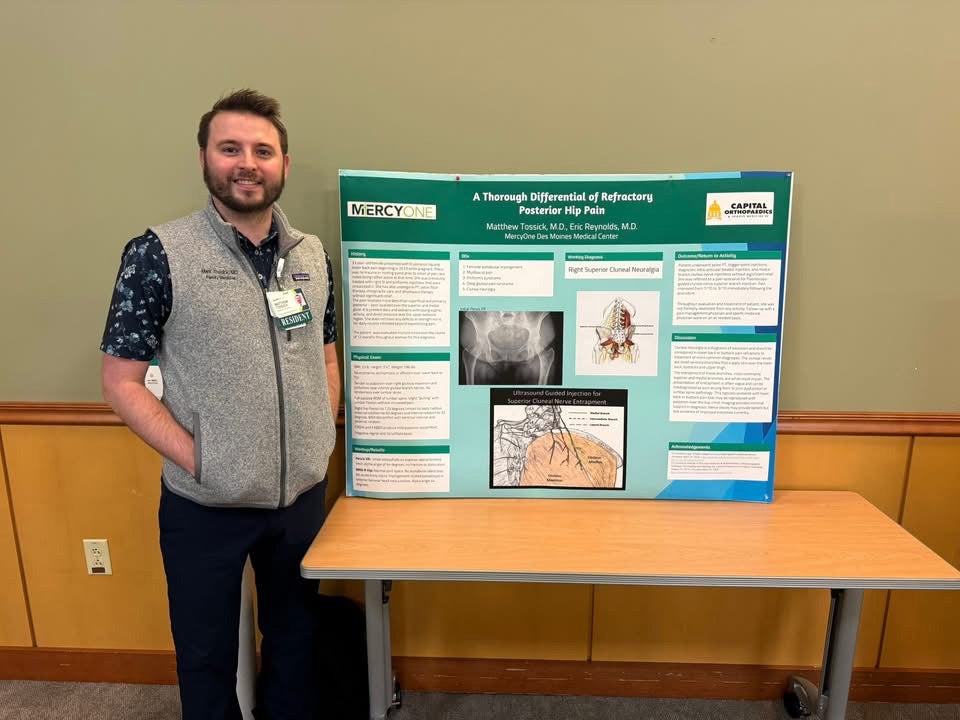
During residency, each resident completes at least one quality improvement project and two additional scholarly activities. Scholarly work may include case presentations, clinical reviews, educational projects, or other activities related to the resident’s interests and experiences.
The goal is to help residents become physicians who can ask meaningful questions, assess evidence, improve the systems in which they work and share useful knowledge with others.
Residents present their work at the program’s annual scholarly forum. Residents also regularly submit and present clinical cases at the Iowa Academy of Family Physicians annual conference and are encouraged to submit appropriate projects to other state and national conferences.
These experiences help residents develop the confidence and communication skills needed to present clinical information clearly, contribute to professional conversations, and lead improvement within their future practices and communities.