
MercyOne Air Med celebrates four decades of life-saving service in the skies over Iowa
November 5, 2026MercyOne Air Med will celebrate the 40th anniversary of service to its patients across Iowa on Nov. 10 at 1 p.m., with events in Des Moines, Mason City and Clinton.
The public is invited to join the festivities, tour the helicopters and meet the people behind the life-saving care that has been MercyOne Air Med's hallmark for the last 40 years.
“Air Methods is proud of the long and successful partnership we’ve built with MercyOne over the past 40 years,” said Air Methods Regional Sales Director Derek Strohman. “Together, we provide the people of Iowa with exceptional safety and best-in-class emergency air medical transport. This anniversary highlights a true commitment to the communities we serve, and we look forward to continuing this tradition of excellence for the next 40 years and beyond.”
Event details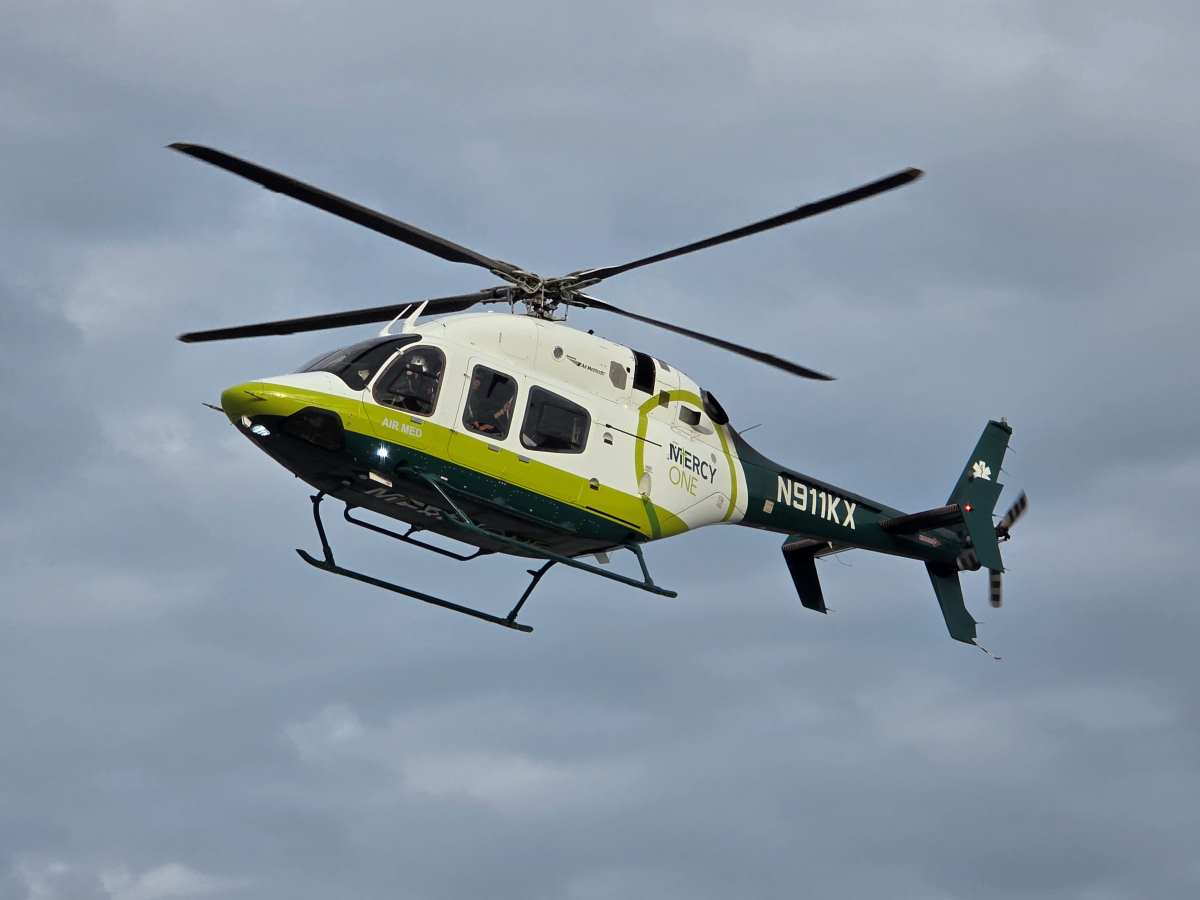
Date: Tuesday Nov. 10 at 1 p.m. start at all three locations:
MercyOne Des Moines Medical Center helipad, 1111 Sixth Ave., Des Moines
MercyOne North Iowa Medical Center, helipad, ED entrance, 45 Linden Drive, Mason City
MercyOne Clinton Medical Center, helipad, 1410 N. Fourth St., Clinton
Speakers in Des Moines will include:
• Ryan Gochoel, regional director, MercyOne Emergency Transport
• Andrew Terry, DO, emergency physician, MercyOne Des Moines Medical Center
• Jesse Tischer, chief transformation and integration officer, MercyOne
• Brian Leonard, vice President, field operations, Air Methods
MercyOne Air Med history
MercyOne Air Med was born in late 1985/early 1986 at the former Mercy Medical Center Des Moines, now known as MercyOne Des Moines Medical Center.
The medical center partnered with Air Methods out of Colorado, which, at the time, was one of the only companies dedicated solely to medical helicopter services. Air Med was the state's first Instrument Flight-Rated helicopter, meaning our pilots had the resources and expertise to fly the aircraft through weather that would normally restrict flights.
In August 1986, Mercy Air Life, now known as MercyOne Air Med, hired its first flight clinicians: five full-time registered nurses, three full-time paramedics, 10 part-time paramedics, four pilots, and four communication specialists. Soon after, it began preparing to launch as Iowa’s fourth hospital-based flight program.
On November 1, 1986, Mercy Air Life officially entered service. For Jeff Johnston, RN, EMT-PS, one of the program's original three full-time paramedics, it was a dream come true.
“Having worked as a paramedic during the formative years of Iowa emergency medical services, I aspired to become a flight paramedic long before the opportunity existed locally,” Johnston said.
Over the decades, the program evolved alongside advances in healthcare and aviation. Mercy Air Life underwent several rebranding efforts, eventually becoming the MercyOne Helicopter Program and, later, MercyOne Air Med as part of the health system's 2019 enterprise-wide rebranding. During this period, the program expanded significantly, adding new bases and consolidating existing ones, including MercyOne North Air Med in Mason City.
Another central Iowa helicopter base was established in Knoxville in 2010, expanding access to air medical services for communities across southern Iowa. This also brought Kara Greenlee, nurse manager at MercyOne Air Med, onto the team.
“One of the most significant moments in our history was the addition of the Knoxville base in 2010,” Greenlee said. “That expansion strengthened our ability to serve patients across the region and, on a personal level, gave me the opportunity to begin flying with this extraordinary team. I often reflect on how that decision affected not only our program but also my own career.”
Later, the network operated additional bases in Clarinda and Sioux City as it continued to expand. Most recently, a new base opened in Clinton, Iowa, during the second quarter of 2026, bringing the total number of active MercyOne Air Med bases to four: Des Moines (1986), Mason City (1999), Knoxville (2010) and Clinton (2026).
“I think the expansion of the Air Med program has been tremendously influential for our communities and has saved countless lives over the years, particularly across Iowa and rural communities, there are many situations where patients simply would not have timely access to the level of critical care they needed without rapid transport and the expertise the Air Med team brings,” said Hijinio Carreon, MercyOne Chief Clinical Officer.
MercyOne Air Med changes lives
Today, MercyOne Air Med is a multi-base operation staffed by more than 60 flight nurses and flight paramedics, 16 pilots, eight mechanics, 16 communications specialists, and numerous administrative and support personnel.
The department completes more than 150 patient missions each month, serving communities throughout Iowa and frequently transporting patients to and from neighboring states, including Illinois, Minnesota, Missouri and Nebraska.
The program has also distinguished itself through innovation.
In April 2010, MercyOne Air Med began flying missions in the Bell 429, becoming the world’s first air medical program to use the aircraft for patient transport. Today, all four current bases operate Bell 429 helicopters, continuing the organization's tradition of investing in advanced aviation technology.
Statewide Maternal Transport Team
In November 2024, MercyOne Air Med unveiled its new statewide Maternal Transport Team, building on our established NICU team, which began in the early 1990s.
“The addition of our maternal transport team two years ago has allowed us to further support mothers and babies during critical moments, extending our reach and capabilities in meaningful ways,” Greenlee shared.
Recognizing Iowa's OB provider shortage, MercyOne set out to create a training program and build a service that would provide the highest level of care to mothers and babies in Iowa, with Ryan Gochoel, regional director of MercyOne Emergency Transport, leading the effort.
“We wanted to show that MercyOne is investing in maternal health, and our goal is to improve access to care by creating a mechanism for the care to go right to the patient,” Gochoel said.
Celebrating 40 years of Air Med services
“What always stood out to me was not just the transportation aspect, but the level of clinical acumen, critical thinking and calm professionalism the crew brought into incredibly high-stress situations,” Dr. Carreon said.
“These teams were often walking into environments where local facilities were doing everything they could, but the patient’s acuity had exceeded the resources immediately available. Air Med became an extension of tertiary-level critical care brought directly to the bedside.”