
The ABCs of safe sleep: How to keep your baby safe while they sleep
August 20, 2026Categories: Maternity Care, Pediatrics Care
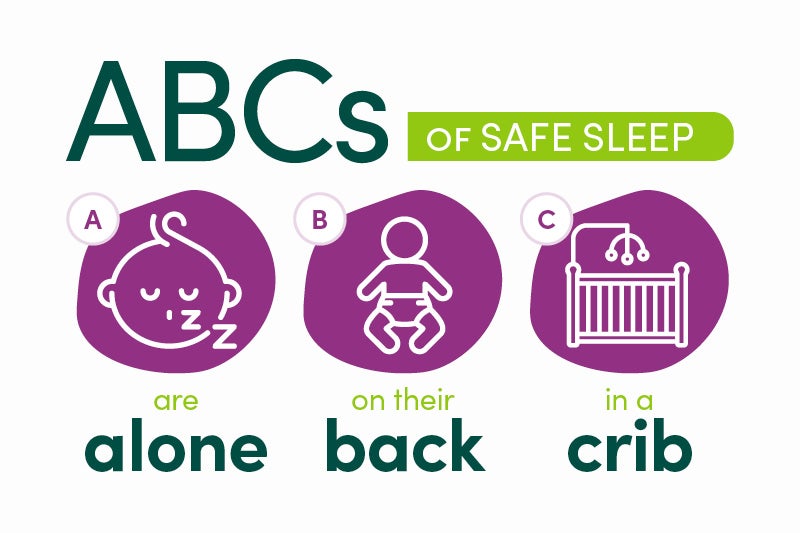
Overview: The ABCs of safe sleep can help reduce the risk of sleep-related infant deaths. Learn why babies should sleep alone, on their back and in a crib, plus more tips for creating a safe sleep environment.
Whether you're a first-time parent or have been through this before, creating a safe sleep environment for your baby is essential. Learning the ABCs of safe sleep is a great first step.
Since these guidelines were introduced in the mid-1990s, they have helped reduce rates of sudden infant death syndrome (SIDS) by approximately 75%, making safe sleep practices one of the most effective ways to keep your baby safe.
The ABCs of safe sleep
A - ALONE
Babies should always sleep alone in their crib, bassinet or safe space. This isn’t to be confused with leaving the child unattended or neglecting them. In fact, the American Academy of Pediatrics recommends that babies sleep in the same room as their parents for at least the first six months of life.
While sharing a room is recommended, sharing a bed is not. Sleeping in an adult bed can put your baby at risk of injury or suffocation.
Your baby could accidentally:
- Roll off the bed.
- Become trapped between the bed and the wall or the bed and the headboard.
- Suffocate due to soft surfaces, such as blankets, pillows and thick mattresses.
- Suffocate due to caregivers, siblings or pets rolling onto them.
For these reasons, a separate sleep space is the safest place for your baby to rest.
B - BACK
Your baby should be put to sleep on their back during the first year of life. Sleeping on their back ensures their airway stays open and clear. They’re also less likely to choke in this position because the windpipe sits on top of the food pipe, so gravity stops spit-up from blocking their breathing.
C - CRIB
It’s best to place your baby in a crib, portable crib or bassinet whenever he or she is sleeping. It’s also recommended that the crib be empty of pillows, blankets, crib bumpers and liners and toys (including stuffed animals). While these items may seem comforting, they can create hazards and increase the risk of injury or suffocation during sleep.
In addition to a clear space, your baby’s sleep surfaces should be firm, flat and level. A firm, uncluttered sleeping environment helps create the safest conditions for your baby.
Learn more about maternity care at MercyOne
More safe sleep environment recommendations
Following the ABCs of safe sleep is the foundation, but there are additional ways to create a safe sleeping environment for your baby that are just as important.
Pay attention to safety standards
Start by choosing a crib, portable crib or bassinet that meets current safety standards. And as mentioned above, your baby's sleep surface should be firm, flat and covered only with a fitted sheet.
Sleeping temperatures
It's also important to dress your baby appropriately for sleep. Instead of using loose blankets, consider a wearable blanket or sleep sack to keep your baby comfortable and warm. A good rule of thumb is to dress your baby in no more than one additional layer than an adult would wear in the same environment.
Parents should also pay attention to the room temperature. Overheating has been associated with an increased risk of sleep-related infant deaths. Keeping the room at a comfortable temperature for a lightly clothed adult can help prevent your baby from becoming too warm while sleeping.
Practice safe sleep everywhere
Finally, remember that safe sleep practices apply everywhere. Whether your baby is sleeping at home, at a relative's house or while traveling, the same guidelines should be followed every time they sleep. Consistency is key, so be sure everyone who cares for your baby understands and follows these recommendations.
If you have questions about safe sleep or your baby's development, the experts at MercyOne are here to help. Find a provider near you and get the support you need through every stage of your parenting journey.
This blog was medically reviewed by a MercyOne provider