What you need to know about skin cancer
April 21, 2026Categories: Cancer Care, Wellness and Prevention
Overview: One in five Americans will develop skin cancer by the age of 70. The good news? Skin cancer is preventable and highly treatable when caught early. Discover everything you need to know about skin cancer.
Skin cancer is the most common type of cancer in the United States with over 5 million people treated each year. The good news? Skin cancer is preventable and highly treatable when caught early. So, here’s everything you need to know about skin cancer.
Types of skin cancer
Skin cancer is the abnormal and uncontrolled growth of skin cells. There are three primary types of skin cancer:
- Basal cell
- Squamous cell carcinoma
- Melanoma
Basal and squamous cell carcinoma are both common and less dangerous forms of skin cancer. Melanoma is rarer and more dangerous due to its ability to spread to other parts of your body.
What causes skin cancer?
Skin cancer is most often caused by DNA damage to the skin from overexposure to ultraviolet (UV) radiation, most commonly from the sun or tanning beds. However, skin cancer can also be caused by:
- Exposure to coal and arsenic compounds
- Scars from disease and burns
- Immune suppression
- Certain rare inherited conditions, such as basal cell nevus syndrome (Gorlin syndrome) or xeroderma pigmentosum (XP)
- Smoking
Signs of skin cancer
Skin cancer typically occurs in places exposed to a lot of sunlight, such as the scalp, face, lips and ears. However, skin cancer can happen in areas that don’t get as much sun exposure, so it’s important to look out for signs of skin cancer everywhere on your body. Signs to watch for include:
- A new mole, bump or scab
- Rough patch
- Changes (size or color) to an existing mole or freckle
- Itchy skin or pain around skin growth
- Sores that look crusty and bleed often
If you notice any of these changes on your body, it’s important to talk to your doctor.
Who is most at risk of skin cancer?
Although anyone can get skin cancer, those with certain characteristics are at higher risk:
- Family history of skin cancer
- People with fair skin, freckles, red or blond hair, blue or green eyes
- History of sunburns or use of tanning beds
- A history of skin cancer
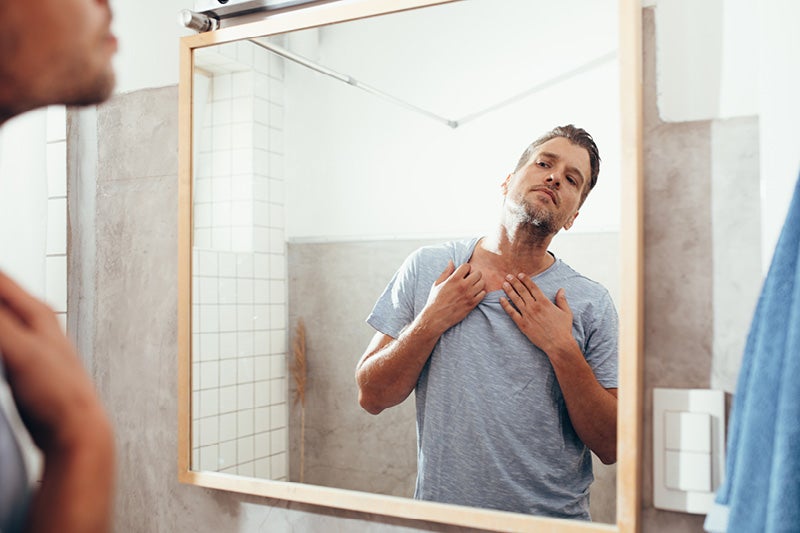
Whether you’re at high risk for skin cancer or not, you should routinely check your skin for any new moles, skin changes or wounds that won’t heal.
How is skin cancer diagnosed?
Early diagnosis is one of the most important ways to beat skin cancer. It’s typically diagnosed with a full-body exam by a doctor, followed by a biopsy. A provider, often a dermatologist, will look closely at your skin from head to toe checking for anything that looks new, unusual or concerning. The exam is quick and usually done right in the clinic.
If something looks suspicious, your provider may recommend a biopsy. This simple procedure removes a small sample of the suspicious skin for lab testing. Types of biopsies include:
- Shave biopsy – removes the top layers of the skin
- Punch biopsy – removes a small, deeper circle of skin
- Excisional biopsy – removes the entire mole or spot
A biopsy is the only way to confirm whether something is cancer. If cancer is found, your provider will walk you through the next steps and your treatment options.
How to prevent skin cancer
Protecting your skin from the sun helps prevent skin cancer. Here are some easy tips to protect your skin:
- Use broad‑spectrum sunscreen SPF 30 or higher daily.
- Wear hats, sunglasses and protective clothing when in the sun.
- Avoid tanning beds.
- Seek shade during peak sun hours (10 a.m.–4 p.m.).
More tips to protect your skin
By understanding the signs, knowing your risk and taking simple steps to protect your skin, you can significantly lower your chances of developing skin cancer. And if something ever does look concerning, talk to your health care provider -- an early diagnosis makes all the difference!
This blog was medically reviewed by a MercyOne provider.