
Learn more about MercyOne Cancer Care Learn more about MercyOne Gastroenterology Care
It began with a colonoscopy.
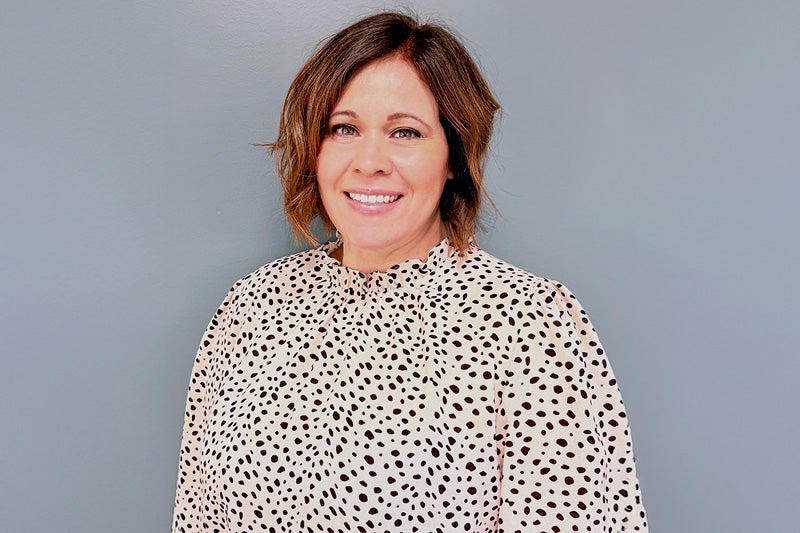
Turned away from donating blood due to low iron, Amy Haiar of Davenport would later have a colonoscopy that detected a concerning spot in her colon. It was New Year’s Eve Day 2021, and she was only 39 at the time.
The New Year would bring not one -- but two – unexpected diagnoses. Amy had stage 3 colon cancer. She also had a rare genetic disorder that causes numerous polyps to grow inside her large intestine and carries nearly a 100% risk of developing colon cancer if untreated.
Amy’s No. 1 reason for sharing her cancer journey? She wants everyone to know... It began with a colonoscopy.
A life-saving colonoscopy
Her procedure at the MercyOne Genesis Digestive Health Care likely saved her life. She had no family history of colon cancer and was still several years away from turning 45, the recommended age to begin colonoscopy screening.
“I was only 39 -- young enough that colon cancer had never entered my mind,” Amy said. “A couple of months before my diagnosis, I was turned away from giving blood because I was low on iron. I’d also been more tired than usual. I mentioned my symptoms to my family doctor and that led to more lab work and a colonoscopy.
“It’s so important, even for young people, to pay attention to any symptoms that aren’t normal for yourself and escalate those concerns to your provider.”
Regular colonoscopy screening prevents and detects colorectal cancer early. Colorectal cancer is preventable if polyps that lead to cancer are found and removed, and curable if the cancer is detected at an early stage, said gastroenterologist Samyuktha Ramavaram, MD, of MercyOne Genesis Bettendorf Gastroenterology Associates.
Over the past several years, the recommended age to begin colorectal screening has lowered from age 50 to 45 for adults at average risk. “Younger and younger patients are getting diagnosed with colon cancer, especially those with several risk factors and a family history,” Dr. Ramavaram said. “Lowering the screening age to 45 has been shown to detect cancer at an early stage when it’s treatable.”
A rare condition
During a colonoscopy, Dr. Ramavaram found a suspicious spot in Amy’s colon. After a whirlwind of tests, Amy learned she not only had colon cancer, but a rare inherited condition called familial adenomatous polyposis or FAP.
“People who go undiagnosed with FAP typically have a lifespan of 42 years old. I was almost 40 when I was diagnosed,” said Amy, who’s a primary care director for MercyOne Medical Group. “I’m the first in my family to have this genetic disorder. If I hadn’t had the colonoscopy, I never would have known.”
The disease is so rare, in fact, she says University of Iowa geneticists had treated only one other family with FAP. Amy’s son and daughter have also tested positive for FAP and will have to undergo yearly colonoscopy screening throughout their lifetimes.
It began with a colonoscopy.
Amy’s New Year’s Eve Day colonoscopy was followed by more procedures – all on holidays. On Valentine’s Day, she had surgery to remove the cancerous mass in her colon. On St. Patrick’s Day, she had a procedure to remove a polyp at the end of her bile duct, developed pancreatitis as complication, and spent nine days in the hospital in the worst pain she’s ever experienced.
“My husband says, ‘No more procedures or appointments on a holiday,’” Amy joked.
Amy underwent chemotherapy at MercyOne Genesis Davenport Cancer Center. She continued working and to have my infusions, scans, labs and appointments with her oncologists close to home.
A new diagnosis
Two months after her chemotherapy ended, blood testing revealed her cancer levels were up. She ultimately was diagnosed with liver cancer. She began chemotherapy again. Leaning on the support of family, friends and her MercyOne Genesis colleagues, she maintains a positive outlook. Four years after her initial diagnosis, she continues to get scans and lab tests every four months.
She will never forget that a positive attitude is how Charly Erpelding of Bettendorf fought rare bone cancer during her lifetime and inspired Quad Citians before she died in 2022 at age 18.
It was during a Charly Erpelding Blood Drive in 2021 that Amy was turned away from giving blood because her iron level was “significantly low.” It was the first sign that something may be wrong with her health and led to her colonoscopy. She’s friends with Charly’s mom, Tara Erpelding, who’s director of the MercyOne Genesis Cancer Center.
“If hadn’t gone to Charly’s blood drive, who knows what situation I’d be in?” Amy said. “I might not be here today.”