
Perimenopause vs. menopause: Know the similarities and differences
October 27, 2026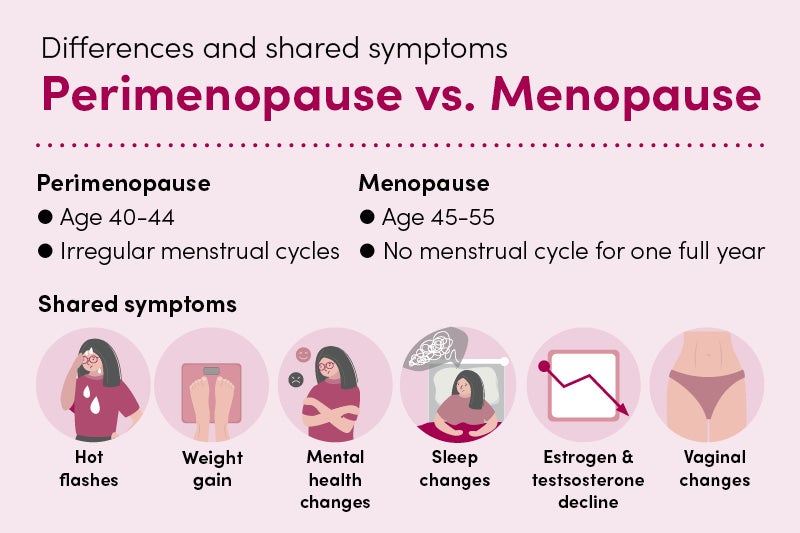
Overview: Knowing the similarities and differences between perimenopause and menopause, as well as preparing for the journey, helps women as they navigate this life change.
Perimenopause and menopause are phases in every woman's life. Many changes occur, but it helps to know the signs, symptoms and ways of coping with each phase.
- Perimenopause typically happens between the ages of 40-44. Subtle symptoms may begin in your mid-30s to early 40s.
- Natural menopause typically occurs around 45-55 years of age with the average being around 51. Symptoms typically last five to seven years.
Some women experience early menopause. If you're experiencing any of the following signs and symptoms, it's important to discuss them with your primary care provider.
Changes in menstruation
- During perimenopause, defined as “around menopause,” your menstrual flow and regularity changes. For 90% of women, this lasts four to eight years before menstruation ends.
- Menopause, defined as “final menstrual period,” is usually confirmed when a woman has missed her period for 12 consecutive months with no other obvious causes.
- If you’re in menopause and experience vaginal bleeding, talk to your primary care provider immediately.
Hormonal changes
Estrogen and testosterone decline during perimenopause and menopause. Additionally, your primary care provider can check your follicle-stimulating hormone (FSH). If it’s consistently high, you're most likely entering menopause.
Hot flashes
These are more likely during menopause, but as many as 75% of North American women have hot flashes during perimenopause. Blood vessels near the surface of the skin dilate and allow more blood flow which gives off body heat. During a hot flash, you may experience sweating and a red, flushed face and neck. After the hot flash, you may have a cold chill.
Disruption in sleep
This can be caused by hormonal changes, hot flashes and night sweats throughout perimenopause and menopause.
Vaginal changes
- Occurring during both perimenopause and menopause, these symptoms are caused by a loss of estrogen and can include vaginal discharge, irritation, burning, itchiness, pain and urinary incontinence.
- During menopause, you may experience thinning and drying of vaginal tissue, making intercourse painful.
Changes in mental health
These symptoms occur during both perimenopause and menopause and may include:
- Mood swings
- Irritability
- Lack of energy
- Anxiety
- Depression or feeling discouraged
- Brain fog
Weight gain
You'll likely experience this during perimenopause and menopause. As hormones shift and estrogen and testosterone decline, your metabolism slows down, and it’s common to gain weight.
Changes in libido
Women often experience a decline in libido during both perimenopause and menopause, due to lowered estrogen and testosterone.
Treatments and lifestyle changes
There's no treatment to avoid perimenopause or menopause, as it's a natural part of a woman’s life. However, you can treat the symptoms, so discuss your options with your primary care provider.
Your provider may recommend the following treatments:
- Antidepressants for mood swings, as well as counseling.
- Medication to regulate periods.
- Hormone replacement therapy.
- Vaginal estrogen.
- Vaginal moisturizers and lubricants during intercourse.
- Medication for improved sleep.
- Treatments for weight management, if weight gain is negatively affecting your health.
- Pelvic floor therapy
- Other non-hormonal medications for relief of hot flashes.
Lifestyle changes are also important and may include:
- Performing more weight-bearing exercises, such as weight training, walking and hiking. Hardcore cardio is not as effective for weight loss as before perimenopause and menopause because it spikes cortisol levels, which often leads to storage of fat around your mid-section.
- Making sure your diet includes more vegetables, fruits, whole grains, healthy fats and protein while limiting alcohol and caffeine.
- Improving your sleep by avoiding TV, computer and phone screens an hour before bedtime to ensure restorative sleep.
- Practicing meditation and breathing techniques for stress management.
- Talking to other women who are experiencing the same life change to gain support.
- Quitting smoking and other tobacco products.
Navigating perimenopause and menopause is much easier if you're prepared and understand the signs, symptoms, potential treatments and lifestyle changes. Talking with a women's health provider at MercyOne may also ease your concerns and frustrations. Additionally, you're not alone! Getting support from friends and family during this time in life is important and helpful in your journey.
More about women's health at MercyOne
This blog was medically reviewed by a MercyOne Provider.