Lung Cancer
What's lung cancer?
Lung cancer begins when abnormal cells grow in the lungs and form a tumor. These cells can spread to other parts of the body if not treated. In many cases, lung cancer develops without symptoms in the early stages, which is why screening and early detection are so important.
Lung cancer is the leading cause of cancer death in the U.S. and in Iowa. Many cases are found at later stages, making treatment and survival rates more difficult.
Who’s is at risk for lung cancer?
Smoking is the leading cause of lung cancer, but non-smokers can also develop the disease. Your risk for lung cancer may be higher if you:
- Smoke or smoked in the past
- Have had long-term exposure to secondhand smoke
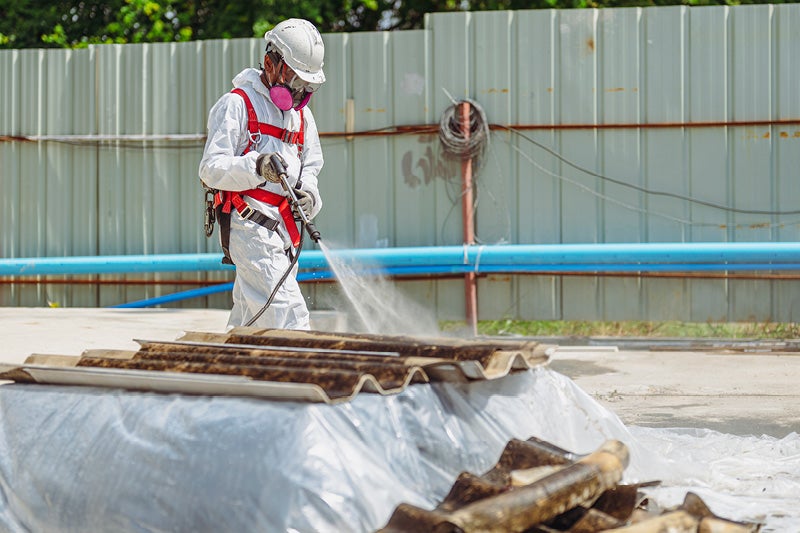
- Were exposed to radon or workplace chemicals
- Have a family history of lung cancer
Want to quit smoking or know someone who could benefit from smoking cessation? Visit our smoking cessation page for more information.
Lung cancer treatment options
If you’re diagnosed with lung cancer, MercyOne experts will create a treatment plan just for you. Your care team will guide you through each option and help you choose what’s right for your type and stage of lung cancer. Common treatment options include:
- Surgery – Removes the tumor or part of the lung
- Radiation Therapy – Uses high-energy rays to destroy cancer cells
- Chemotherapy – Uses medicine to kill cancer cells throughout the body
- Targeted Therapy – Focuses on specific cancer cells for more precise treatment
- Immunotherapy – Helps your immune system fight cancer
What’s lung cancer screening?
Lung cancer screening looks for lung cancer before you have any symptoms. This can help find cancer at an early stage. When abnormal tissue or cancer is found early, it may be easier to treat. By the time symptoms appear, cancer may have begun to spread to other places in your body.
The lung screening exam is performed using a low-dose computed tomography (LDCT) scan. During the test, you’ll lie on a table while the CT scanner uses a small amount of radiation to create digital pictures of your lungs. The test is painless and only takes a few minutes to complete.
Many MercyOne pulmonology locations use the robotic bronchoscopy, which offers a targeted, minimally invasive way to biopsy small, hard to reach lung nodules.
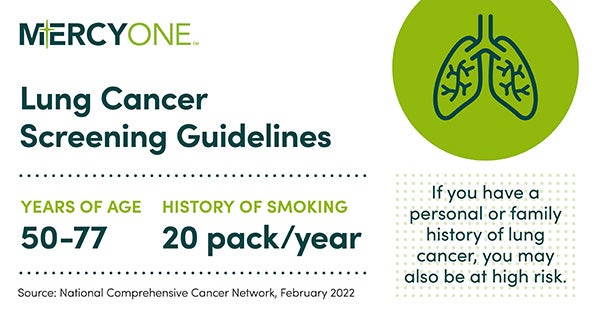
Medicare and most private insurers cover lung cancer screening once per year for individuals who meet the following criteria, which expanded in February 2022:
- Between the ages of 50 and 77 and are a current smoker, or quit smoking within the last 15 years
- Asymptomatic (no signs or symptoms of lung cancer)
- Have a tobacco smoking history of at least 20 pack-years (one pack-year = smoking one pack per day for one year; 1 pack = 20 cigarettes)
- Received a written order from a physician or qualified non-physician for lung cancer screening with LDCT
Schedule with your PCP to see if you qualify for a lung cancer screening.
Lung screening frequently asked questions
Lung cancer screening is recommended if you:
- Have a history of heavy smoking (smoking one pack per day for 20 years or more).
- Are a current smoker or have quit within the last 15 years.
- Are between the ages of 50 and 77.
- Medicare patients meeting the risk criteria ages 50 – 77 are covered with no out-of-pocket cost.
- Most private insurance covers lung cancer screening for people meeting the risk criteria ages 50 –77 with no out-of-pocket costs. If you’re unsure, ask us to obtain authorization from your insurance before the screening exam.
- You and your insurance company may be responsible for costs associated with additional tests and treatments after your initial screening.
Lung cancer screenings are quick and painless. Before your screening, your technician will have you remove any metal you’re wearing and change into a gown. You’ll lie on your back on a table, which will move through the CT scanner. During this scanning process, any motion – even breathing – could blur the image. You’ll need to hold your breath for five to 10 seconds at a time. The entire scan takes less than 10 minutes to complete.
What happens after my lung cancer screening?
You’ll be able to leave right after your lung cancer screening with no downtime required. There are no adverse effects reported after a screening, and you can drive yourself home.
The good news?
Most patients screened do not have lung cancer. It's important for you to know that more than 75% of people screened do not have any abnormal findings. Less than 5% of screened patients are diagnosed with lung cancer.